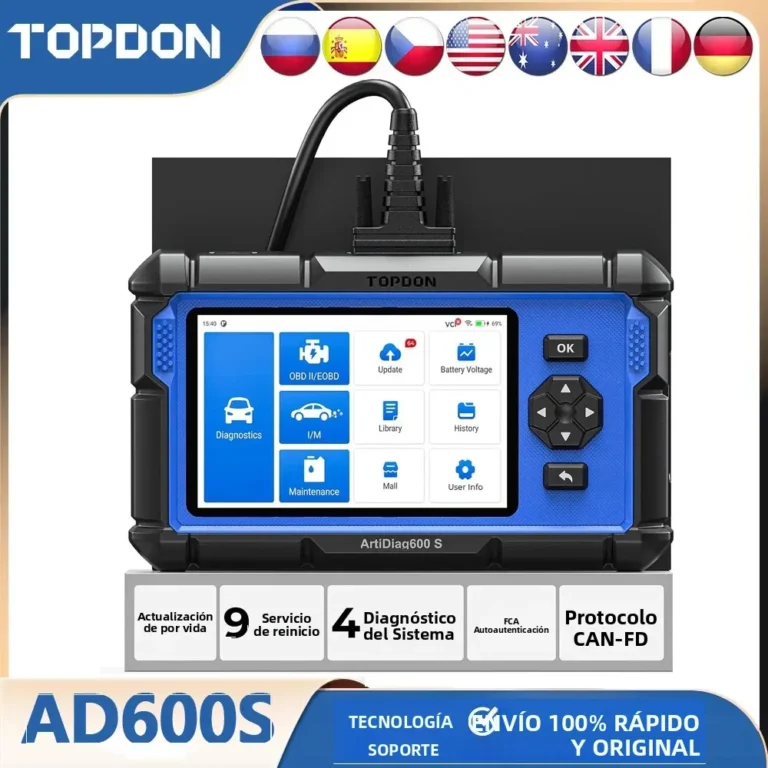
You press the gas pedal after a speed bump, the car seems to ‘hesitate’ for a second as if it were about to stall, lurches hard, and burns fuel like a V8 engine. When you plug in your scanner, codes P0101 or P0102 (Mass Air Flow MAF Sensor) or P0106 (Manifold Absolute Pressure MAP Sensor) show up.
An OEM MAF or MAP sensor costs between $1,400 and $3,800 MXN, yet often it only has dust stuck to its sensing element or a loose 5V wire. Here is the golden rule to test it using your budget scanner and a multimeter.
On any warmed-up gasoline engine at idle (750–800 RPM with A/C off), the MAF sensor in your scanner's Live Data should read roughly as many grams per second (g/s) as your engine's displacement in liters: 1) 1.6L engine (Versa, Aveo, Vento): ~1.6 to 2.2 g/s at idle. 2) 2.0L engine (Jetta, Sentra, Mazda 3): ~2.0 to 2.7 g/s. 3) 2.5L engine: ~2.5 to 3.2 g/s. When revved to 2,500 RPM, that value should roughly triple (~7 to 10 g/s).
1. Normal MAF (g/s) and MAP (kPa and Volts) Readings via Scanner and Multimeter
While the MAF sensor measures the mass of air entering through the air filter duct, the MAP sensor measures vacuum (suction) inside the intake manifold:
Verify that your readings fall within these technical ranges:
| Sensor and Parameter | Key On Engine Off (KOEO) / Idle | With Multimeter on Signal Pin |
|---|---|---|
| MAF Sensor (Airflow) | 0.0 g/s engine off | 1.6 to 3.5 g/s at idle | 0.9 V to 1.3 V at idle; climbs up to 4.0 V at wide-open throttle. |
| MAP Sensor (Pressure in kPa) | 78 kPa in Mexico City (100 kPa at sea level) engine off | 28–38 kPa at idle | 3.8 V to 4.5 V with ignition ON; drops to 1.1 V–1.5 V at idle. |
| Code P0102 (MAF Circuit Low) | Stuck at 0.00 g/s even when revving | Missing 12V or 5V power supply at the MAF harness (check fuse). |
2. How to Clean and Test Your MAF/MAP Sensor in 3 Weekend Steps
- Step 1 — Read g/s on your scanner before removing anything: If your 1.6L engine reads 5.5 g/s at idle (way too high) or fails to climb past 4 g/s when revving to 3,000 RPM, the sensing element is coated in lint and oil residue.
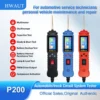
- Step 2 — Check power supply with a multimeter if you have code P0102: Using fine multimeter probes or a P200 circuit probe, verify that the MAF connector is receiving 12V battery power (or 5V reference) and a clean ground.
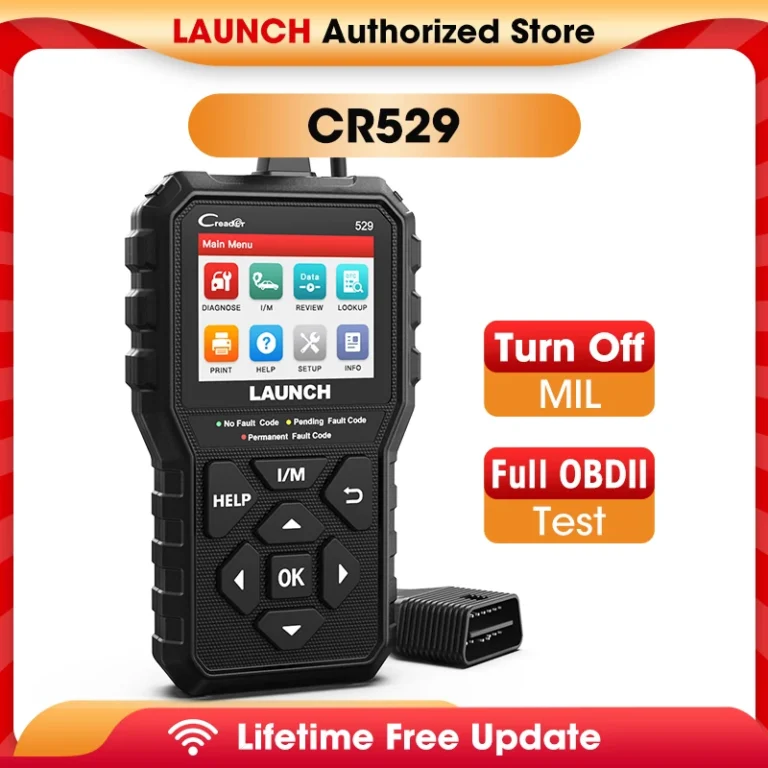
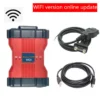
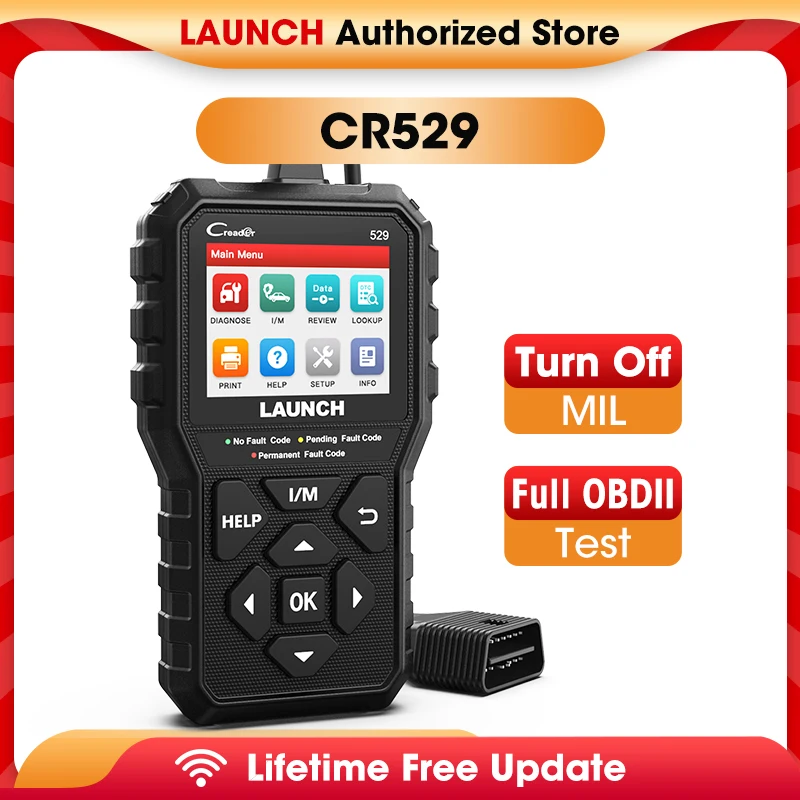
- Step 3 — Clean with MAF spray, let dry for 15 minutes, and re-test: Spray from 15 cm away, let it evaporate completely, reinstall, and recheck g/s in Live Data on your LAUNCH CR529. You will see throttle response bounce right back.
3. Recommended Budget Equipment for MAF and MAP Testing
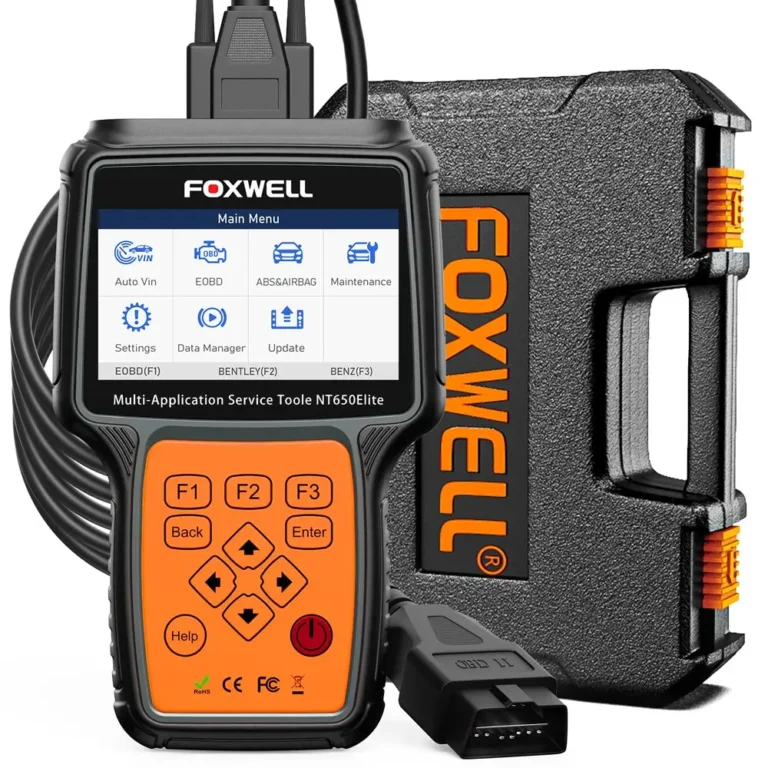
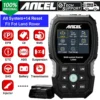
With this OBD2 reader, you can monitor airflow in g/s and manifold pressure in kPa on any vehicle:
4. Frequently Asked Questions from Drivers and Repair Shops
1. Why does the MAP sensor read 78 kPa with the engine off in Mexico City or Toluca instead of 100 kPa?
Because of altitude above sea level (barometric pressure). At 2,240 meters elevation (Mexico City), normal atmospheric pressure is ~77 to 79 kPa, whereas at the coast (Veracruz, Cancun) it is ~100 to 101 kPa.
2. Does a torn intake hose between the MAF and throttle body trigger code P0101?
Yes, it is the #1 cause of unnecessary MAF replacements: if the flexible plastic intake boot is cracked downstream of the sensor, air enters through the crack without passing the MAF, making the computer think the sensor is underreporting airflow.