You’re driving home calmly on a Thursday afternoon, go over a speed bump or accelerate to merge onto a main avenue, and suddenly that yellow engine-shaped icon stays lit on your dashboard: the dreaded Check Engine light. At that exact moment, you don’t just worry about your car breaking down over the weekend; you worry even more about walking into a repair shop blind and hearing the classic line: “We have to pull the injectors, replace the fuel pump, and buy a whole new catalytic converter—it’s going to be $9,500 MXN.”
The truth few repair shops explain is that your car actually tells you exactly what’s wrong, but it speaks in a 5-character language that requires the right translator. Today, any car owner can plug in an affordable code reader in their own garage on a Saturday morning, pull the exact fault code in under 5 minutes, and know the whole truth before spending a single peso.
To read your car’s OBD2 fault codes at home, you only need to: 1) Locate the 16-pin trapezoidal connector under the steering wheel (with the engine off), 2) Plug in your automotive scanner, 3) Turn the key to the ON position (so dashboard warning lights illuminate without starting the engine), and 4) Press “Read Codes”. The tool will display a code made of one letter and four digits (such as P0300 or P0171) indicating which specific circuit or sensor logged the issue.
1. Why Does the Check Engine Light Come On, and What Does It Mean If It’s Flashing?
Your vehicle’s central computer (called the ECU or PCM) monitors dozens of sensors multiple times per second: how much fuel enters through the fuel injectors, how much air passes through the filter, what temperature the coolant is at, and how much oxygen exits through the exhaust. If you want to dive deeper into the system’s basic architecture, check out our complete guide on what an automotive scanner is and what it does.
When one of those readings drifts outside factory specifications for one or two consecutive drive cycles, the computer stores a Diagnostic Trouble Code (DTC) and illuminates the MIL (Check Engine) light. However, your dashboard gives you a vital first clue depending on how the light behaves:
- Solid Check Engine light (steady, not flashing): Indicates a logged fault in emissions, air/fuel mixture, an out-of-range sensor (such as an oxygen sensor), or even a loose gas cap. You can continue driving carefully home to scan it over the weekend, although your car may burn extra fuel or fail an emissions inspection.
- Flashing Check Engine light (blinking): Warning! This indicates a severe misfire in one or more cylinders (codes P0300 through P0308) that is dumping raw, unburned fuel directly into the catalytic converter. If you keep driving hard like this, you can melt the catalytic converter within a few kilometers. Slow down immediately and scan the vehicle before driving it again.
2. No Jargon: How to Translate Any OBD2 Code (Letters P, C, B, and U)
An unscrupulous mechanic takes advantage of the fact that a code like P0171 or C0035 sounds like secret rocket-science jargon. In reality, the international SAE J2012 standard organized trouble codes like an easy-to-read mailing address. Every code consists of 1 letter followed by 4 digits:
| Position in the Code | Possible Values | What Your Car Is Telling You in Plain English |
|---|---|---|
| 1st Position: The Initial Letter (Which area of the car has the fault?) | P = Powertrain (Engine & Transmission) C = Chassis (ABS Brakes, Suspension, Steering) B = Body (Bodywork, SRS Airbags, Comfort) U = Network (Communication Network & Wiring) | If it starts with P, the issue is under the hood or in the transmission. If it starts with C or B, you need a 4-system scanner (ABS/Airbag). If it starts with U, it is usually a blown fuse, loose ground, or broken wire. |
| 2nd Position: The First Digit (Is it a universal or manufacturer-specific code?) | 0 = Generic Universal Code (SAE) 1, 2, or 3 = Manufacturer-Specific Code (OEM) | A 0 (e.g., P0420) means the exact same thing on a Chevrolet Aveo, a Nissan Versa, or a Volkswagen Vento. A 1 (e.g., P1128) is specific to that automaker. |
| 3rd Position: The Subsystem (Which component family failed?) | 1 or 2 = Air & Fuel Metering (MAF, MAP, Injectors) 3 = Ignition System (Spark Plugs, Coils, CKP) 4 = Emissions Control (Catalytic Converter, EVAP, EGR) 5 = Vehicle Speed & Idle Control (Throttle Body, IAC) 6 = Computer (ECU) & Internal Circuits 7 and 8 = Automatic Transmission | Just by checking the third digit, you know whether you’re being told the truth: if you have a P0302 code (3 means ignition), the shop has no reason to charge you for a transmission repair. |
| 4th & 5th Positions: The Last Two Digits | From 00 to 99 | They pinpoint the exact component and the cylinder or bank. For example, in P0304, the digits 04 clearly tell you the spark or compression misfire is specifically in Cylinder 4. |
3. Step-by-Step Guide to Scanning Your Car in 5 Minutes This Saturday or Sunday
You don’t need to take anything apart or get grease on your hands to run your first diagnostic. Follow this safe procedure in your garage:
- Locate the 16-pin OBD2 port: Look under the driver-side dashboard, right above the brake and accelerator pedals (on some Volkswagen, Renault, or Peugeot models, it may be behind a small plastic cover near the gear shifter or center console).
- Plug in your scanner cable: The connector is trapezoidal, so it only fits one way. Push it in firmly without forcing the pins; you’ll see the scanner screen light up immediately because it draws power directly from Pin 16 of your vehicle.
- Turn the vehicle to Ignition mode (Key ON): Turn the key two clicks until all dashboard warning lights illuminate, without cranking the engine (on push-button vehicles, press the Start/Stop button twice without pressing the brake pedal). This wakes up the computer so it can communicate with your scanner.
- Select “Diagnostics / Read Codes”: Enter your scanner’s menu and check the three code folders:
- Stored or Current Codes (Stored DTCs): Confirmed faults that are actively keeping the Check Engine light on right now.
- Pending Codes (Pending DTCs): Intermittent faults that occurred only once (for example, after hitting a puddle or filling up with contaminated fuel) and that the computer is monitoring before turning on the warning light.
- Permanent Codes (Permanent DTCs – Mode $0A): On modern vehicles, these are codes stored in historical memory until the computer verifies on the road by itself that the part has actually been repaired.
- Write down the codes before clearing them: Never press “Erase Codes” without first writing down the exact code and its Freeze Frame data. Clearing the memory without checking the root cause is like taking a painkiller without treating the infection: the light will come right back on within a few kilometers.
4. The Mistake of Throwing Parts at a Problem and How to Read Freeze Frame Data
Here is the most valuable secret that separates an informed owner from someone who spends thousands of pesos without fixing the problem: an OBD2 code never automatically tells you to replace a sensor; it tells you that the reading from that circuit went out of range.
Let’s look at a real-world example that happens every weekend in Mexico: you scan your car because it hesitates going uphill, and code P0171 (System Too Lean Bank 1) pops up. A shop that guesses will immediately tell you to buy a new oxygen sensor ($1,800 MXN). You buy it, they install it, and the next day the Check Engine light comes right back on.
Why did that happen? Because the oxygen sensor was actually doing its job—it was warning you that there was too much air or too little fuel in the engine (perhaps caused by a cracked $80 MXN vacuum hose or because the fuel filter is clogged). To avoid falling into that trap, use your scanner’s Freeze Frame function, which shows you a “snapshot” of the exact second the fault occurred:
- Engine speed (RPM) and Vehicle speed (km/h): If code P0171 was recorded at 750 RPM and 0 km/h (at a traffic light), it is almost always a cracked vacuum hose or an intake manifold gasket sucking in air. On the other hand, if it was recorded at 3,800 RPM climbing a hill at 90 km/h, it points to insufficient fuel delivery (a weak fuel pump or clogged filter).
- Engine Coolant Temperature (ECT): Reveals whether the fault only happens when the engine is dead cold in the morning (e.g., 22 °C) or once it has already reached normal operating temperature (90 °C to 98 °C).
5. Which Affordable Scanner Should You Keep in Your Glovebox or Garage?
Owning your own scanner today costs less than what many shops charge for a single sloppy “computer scan.” Depending on what you want to do with your vehicle, these are the two best Mexico-tested options with Spanish menus and zero annual subscription fees:
Option 1: For the Proactive Owner Who Wants to Protect Their Engine and Pass Emissions Inspection (Entry-Level)
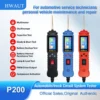
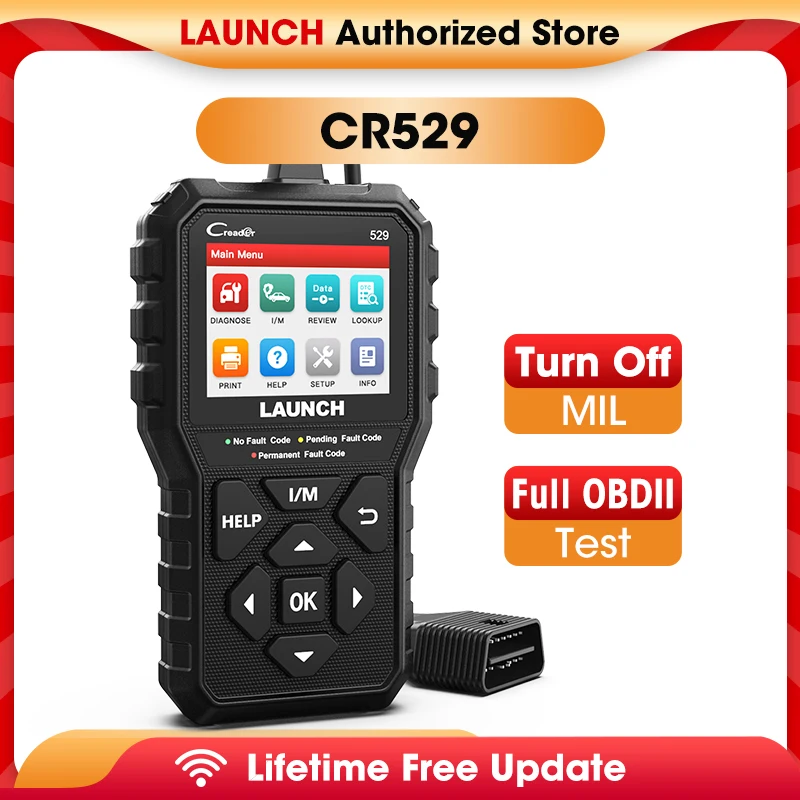
If you want a practical, rugged tool ready to keep in your glovebox that instantly translates why the Check Engine light came on, reads Live Data, displays Freeze Frame, and tells you with one button whether your car’s monitors are green to pass emissions testing, this is your smart buy:
Option 2: For the Weekend Enthusiast Who Also Wants to Check ABS Brakes, Airbags, and Perform Maintenance Resets
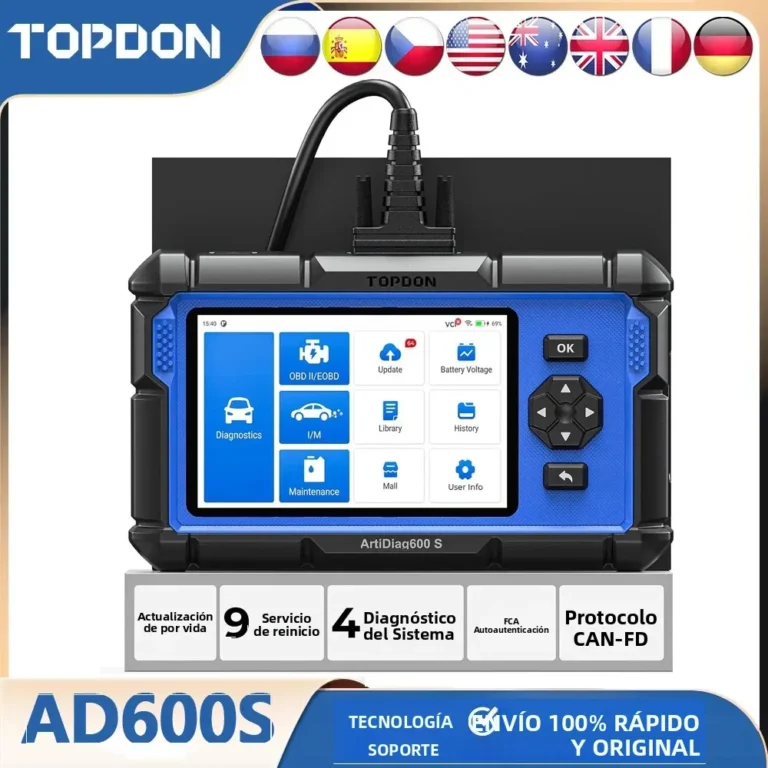
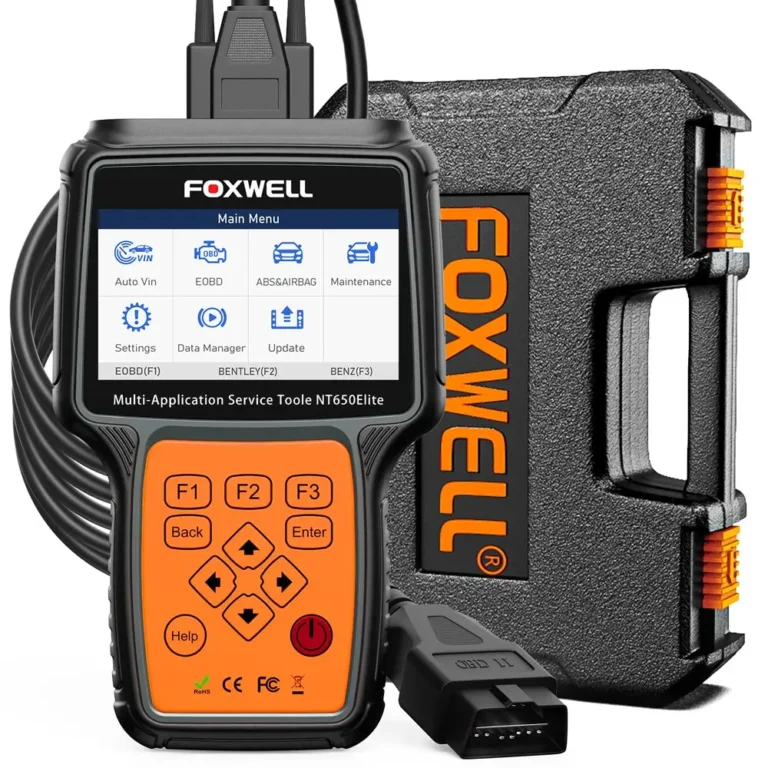
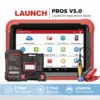
If beyond the engine you like working on your car on Saturdays or Sundays—for instance, you want to clean and relearn the throttle body yourself, retract the electronic parking brake (EPB) to replace brake pads, turn off the Airbag (SRS) warning light, or diagnose an ABS wheel speed sensor—a basic engine code reader won’t be enough. In that tier, the FOXWELL NT650 Elite stands out, and if your vehicle is a 2020 or newer model with a high-speed CAN-FD network, the TOPDON AD600S (ArtiDiag600S)—both with insured shipping and direct warranty across all of Mexico.
6. Frequently Asked Questions About Reading OBD2 Codes
1. Can plugging in an OBD2 scanner deprogram my car or void my warranty?
No. Reading OBD2 codes, Freeze Frame data, and live data streams is a 100% passive operation (it only reads information the computer already makes available at the port). As long as you plug in and unplug the tool with the engine off, it does not alter any programming or leave any trace that affects warranties.
2. Why does the Check Engine light come back on a few days after clearing the code?
Because clearing the code only resets the computer’s fault memory—it does not fix the physical or electrical problem. As soon as the vehicle completes a new drive cycle and the computer detects again that the sensor or air/fuel mixture is out of range, it turns the warning light back on to protect the engine.
3. Does a budget scanner also read ABS and Airbag warning lights?
Entry-level code readers like the LAUNCH CR529 are built under the global OBD2 standard to read exclusively the engine and emissions module (P-type codes). If you need to read and clear ABS Brake lights (C codes), SRS Airbag lights (B codes), or Automatic Transmission codes, you need a 4-system multi-module scanner like the TOPDON AD600S or an advanced service tool like the FOXWELL NT650 Elite.
4. How can I know for sure which scanner is compatible with my car’s make and year?
Any gasoline car or truck sold in Mexico from 1996 onward (and many European or diesel models from the early 2000s) with a 16-pin connector supports OBD2 code reading. If you own a newer model (2020 to 2026) or are looking for a specific special function for your vehicle, message us on WhatsApp at +52 5568945894 with your make, model, year, or VIN and our technical team will verify compatibility at no cost before you buy.
This coming Saturday or Sunday, you don’t have to guess what’s wrong with your vehicle or blindly accept inflated repair quotes. Browse our category of OBD2 automotive scanners with nationwide shipping across Mexico today, or send us a direct message on WhatsApp so we can recommend the exact code translator for your car.