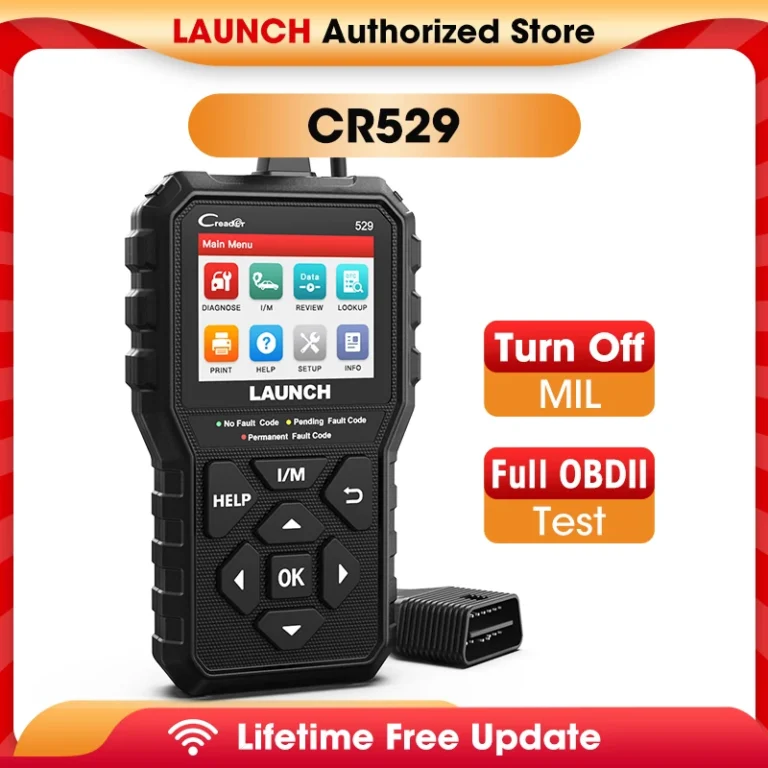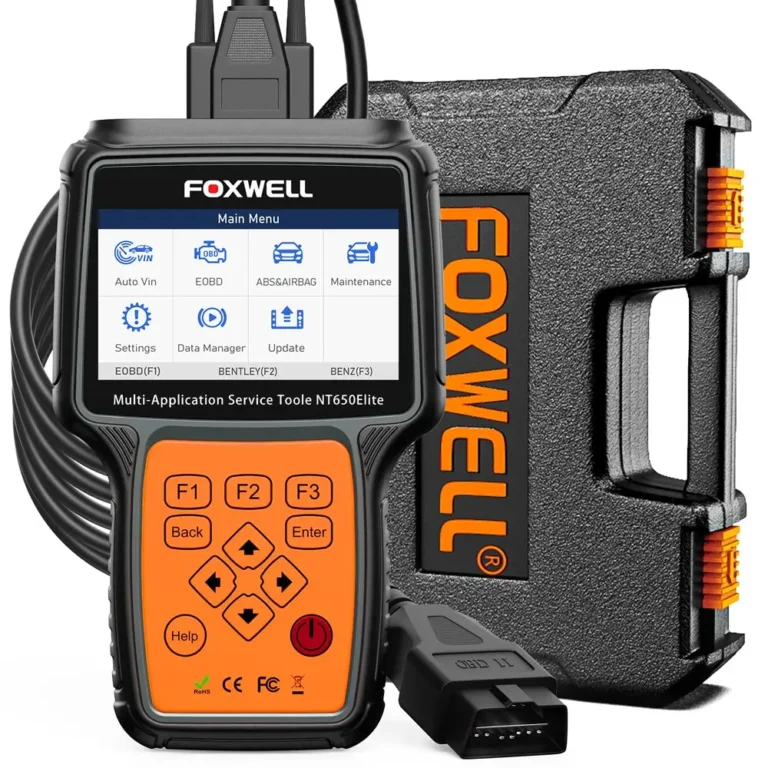
Many vehicle owners and mechanics use their automotive scanner solely to read and clear trouble codes. However, the real power that separates a parts-changer from an expert diagnostician lives on a screen almost everyone overlooks: the Live Data stream.
Within that list of parameters are two lines called STFT (Short Term Fuel Trim) and LTFT (Long Term Fuel Trim) that reveal in real time whether your engine is flooding with fuel or sucking in unmetered false air.
Fuel Trims show in percentage (%) how much extra fuel the engine computer is adding (+) or pulling (-) to maintain the ideal air-fuel ratio (14.7 parts air to 1 part gasoline). On a healthy engine, both STFT and LTFT should stay between -8% and +8% (ideally close to 0%). If they add up to more than +15% or +20%, you have a lean condition (too little fuel or excess air); if they drop below -15% or -20%, you have a rich condition (leaking injector or excessive fuel pressure).
1. How Short Term Fuel Trim (STFT) and Long Term Fuel Trim (LTFT) Work
Think of the car's computer as a chef tasting a soup: the oxygen sensor tells it every second whether it needs more or less fuel. STFT is the instant second-by-second correction, while LTFT is the learned memory built up over several miles.
Use this technical reference table under the open hood with the engine at normal operating temperature (90 °C):
| Scanner Reading | What the Computer Is Doing | Direct Mechanical Diagnosis |
|---|---|---|
| STFT / LTFT between -5% and +5% | Perfect stoichiometric mixture | Injectors, fuel pump, MAF, and intake operating at 100%. |
| LTFT at +18% to +25% (High positive) | Adding emergency fuel due to lean mixture (P0171) | Intake vacuum leak, dirty MAF sensor, or weak fuel pump pressure. |
| LTFT at -18% to -25% (High negative) | Cutting fuel due to rich mixture (P0172) | Stuck-open/leaking injector, clogged air filter, or faulty fuel pressure regulator. |
2. The Master 2,500 RPM Test to Catch Vacuum Leaks in 60 Seconds
- Step 1 — Measure LTFT at idle (750–800 RPM): With the vehicle parked in Park or Neutral, note the LTFT B1 percentage. Suppose it reads +22% (very lean mixture at idle).
- Step 2 — Hold the throttle at 2,500 RPM for 20 seconds: Watch the graph on your scanner: if raising the RPM to 2,500 causes LTFT to drop sharply from +22% down to +3%, you have 100% confirmed a vacuum leak in the intake manifold or vacuum hoses.
- Step 3 — How to interpret if LTFT climbs even higher under throttle: If it was at +8% at idle but jumps to +24% when revving to 2,500 RPM under load, it is not a vacuum leak: it is a lack of fuel delivery (clogged fuel filter, tired fuel pump, or restricted injectors).
3. Which Scanner to Choose for Graphing Live Data with Shop-Grade Precision
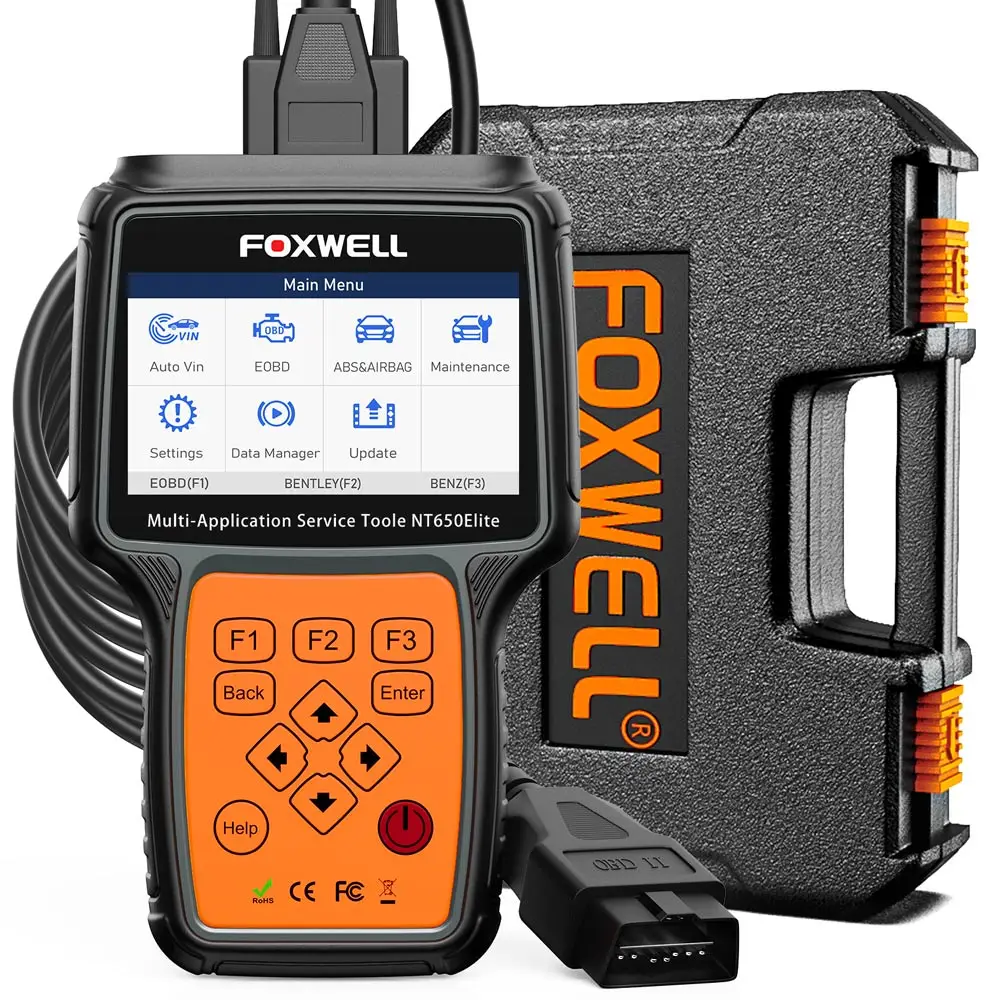
To view smooth graphs of STFT, LTFT, oxygen sensors, and MAF on a single screen—plus get over 25 service reset functions:
4. Frequently Asked Questions
1. Why does my scanner show OL (Open Loop) and Fuel Trims stuck at 0%?
Because the engine is still cold or you just started it. The computer needs the oxygen sensor to reach around 350 °C to enter Closed Loop (CL) and begin calculating Fuel Trims.
2. Do Fuel Trims reset automatically after cleaning fuel injectors?
STFT corrects itself immediately, but LTFT can take several drive cycles to return to 0%. With the Foxwell NT650 Elite or the Topdon AD600S, you can reset the adaptive fuel mixture values right after a tune-up.